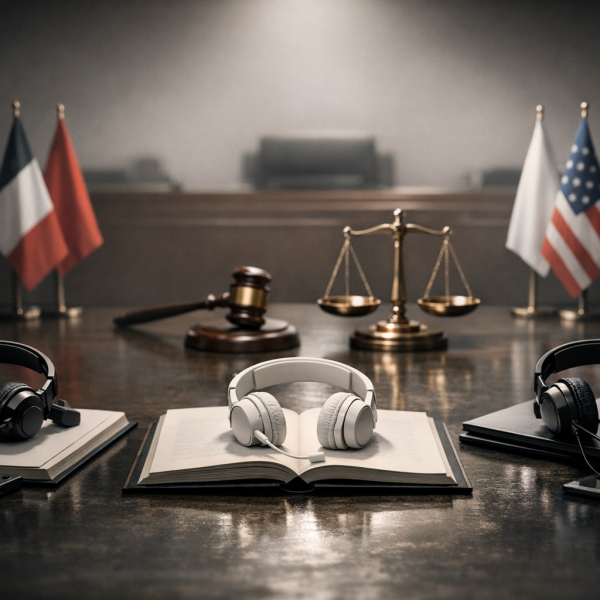
Legal settings demand absolute precision, cultural awareness, and strict adherence to procedure. When people who speak different languages become involved in court cases, immigration matters, corporate disputes, or criminal investigations, interpretation services are essential to guarantee that everyone fully understands what is being said. The right type of interpreter, working in the correct mode, helps protect due process, supports fair outcomes, and ensures that linguistic barriers never compromise justice.
Key Interpretation Services Required in Legal Contexts
A wide range of interpretation services is required in courts, law firms, arbitration venues, and government agencies. These services cover spoken communication, written materials, and highly specialized proceedings that demand trained legal linguists. For any law office, corporate legal department, or public authority working with multiple languages, having access to reliable interpreters is no longer optional; it is a fundamental operational need.
Beyond simple language conversion, legal interpretation involves correctly conveying terminology, procedural instructions, and culturally sensitive nuances. This is especially important when witnesses, defendants, or clients are not fluent in the official language of the jurisdiction. In these circumstances, professional help such as certified translation portuguese to english is vital for maintaining accurate records and ensuring that all parties understand their rights and obligations.
The following list outlines the main interpretation services often required in legal proceedings and related environments. Understanding each type helps legal professionals and institutions select the right solution for each situation, improving clarity, efficiency, and legal compliance.
1. Courtroom Interpretation
Courtroom interpretation is the best-known type of language support in the legal world. It covers criminal trials, civil hearings, family law cases, and administrative matters.
- Interpreting questions and answers during testimony
- Conveying judicial instructions and rulings
- Supporting communication between defendants and the court
- Assisting limited English proficiency individuals in understanding proceedings
Courtroom interpreters often need certifications or official authorization, depending on the jurisdiction. They must be familiar with legal procedures and maintain strict impartiality and confidentiality.
2. Deposition and Witness Interview Interpretation
Depositions and witness interviews are vital stages in discovery and case preparation. Interpreters in this setting must accurately reproduce statements, questions, and clarifications, often in high-pressure environments.
- Depositions in civil or commercial cases
- Pre-trial witness interviews and sworn statements
- Insurance investigations and expert interviews
Since depositions can be used as evidence, every word must be interpreted and recorded precisely. Interpreters also need to keep a neutral tone and avoid adding or omitting information.
3. Simultaneous Interpretation for Hearings and Conferences
Simultaneous interpretation is widely used during multi-party hearings, international arbitrations, and legal conferences where real-time communication is essential. The interpreter speaks at the same time as the original speaker, usually through headsets and microphones.
- International arbitration and mediation sessions
- Regulatory or parliamentary hearings with foreign participants
- High-level corporate compliance meetings and investigations
This mode demands exceptional concentration, fast processing, and strong terminology knowledge. It is the preferred method when time is limited and multiple languages are involved.
4. Consecutive Interpretation for Client Meetings
Consecutive interpretation is commonly used in one-on-one or small group settings where parties can pause to allow the interpreter to speak. It is particularly useful for:
- Attorney-client consultations
- Settlement discussions
- Notary appointments and document signings
- Immigration interviews and preliminary case reviews
In this setting, the interpreter listens to a segment, takes notes, then delivers the content accurately in the other language. The approach promotes clarity and allows attorneys to monitor the flow of communication closely.
5. Remote and Telephone Interpretation
Modern legal practice involves many remote interactions. Telephone and video-based interpretation services have become essential, especially when parties are in different locations or when urgent assistance is needed.
- Emergency consultations outside office hours
- Remote client interviews and intake calls
- Virtual court hearings and administrative sessions
Remote interpreters must still follow the same ethical and accuracy standards as in-person professionals, while also dealing with technological issues such as audio quality and platform limitations.
6. Interpretation for Immigration and Asylum Procedures
Immigration and asylum processes rely heavily on accurate interpretation, as the information given can determine whether someone obtains legal status or protection.
- Interviews with immigration officers
- Asylum hearings and appeals
- Detention center interviews and legal aid sessions
Interpreters in this domain must handle sensitive stories and traumatic experiences while remaining impartial and respectful. Misinterpretation can have severe consequences, so specialized training is essential.
7. Police, Law Enforcement, and Investigative Interpretation
During investigations, law enforcement agencies often need interpreters to communicate with suspects, victims, and witnesses who do not speak the official language.
- Interrogations and suspect interviews
- Victim and witness statements at police stations
- On-site interpretation during raids or operations
Interpreters must be skilled at working under pressure and aware of the legal implications of every statement. They also need to understand police procedures and rights advisories to ensure all information is conveyed correctly.
8. Legal and Certified Translation to Support Interpretation
While interpretation deals with spoken communication, written translation is just as crucial for legal proceedings. Many cases require official translations of contracts, evidence, identification papers, and court documents.
- Certified translations of contracts and corporate records
- Translation of court orders, judgments, and pleadings
- Translation of exhibits, medical reports, and technical evidence
High-quality legal translation complements oral interpretation, providing a complete multilingual record that courts, clients, and regulatory bodies can rely on.
Choosing the Right Interpretation Services for Legal Work
Legal professionals must ensure that language support in their cases is accurate, impartial, and compliant with local regulations. The variety of interpretation services available, from in-court simultaneous work to remote consultations and immigration interview assistance, makes it possible to handle almost any scenario involving different languages.
Selecting specialized interpreters with legal knowledge and experience protects the rights of all parties, strengthens the evidentiary value of testimony, and improves overall case management. By combining reliable interpretation with high-quality legal translation, any court, law firm, or organization can maintain clarity and fairness in multilingual legal proceedings.